← Back to all guides

Beginner lesson · Paper, paint, and sensible priorities

Materials that let watercolor behave.

Good materials do not paint the picture for you—but they allow you to learn without fighting your supplies. I would rather see a beginner own a few dependable tools than a large box of materials that causes frustration.

My honest advice

The wrong paper can make a beginner believe the problem is them.

From my studio

“Watercolor is an amazing medium once you understand how it behaves.”

Many people give up too soon—not because they cannot paint, but because their paper, paint, or brushes are working against them.

Begin with the surface

For value studies and color paintings, I use professional 100% cotton paper.

Paper has an enormous effect on the movement of water, the softness of an edge, the evenness of a wash, and the time available to work. For a beginner, my clearest recommendation is 100% cotton, 140 lb, cold-pressed watercolor paper.

Fiber100% cotton

Strong enough for wet washes and made to support watercolor techniques.

Weight140 lb · 300 gsm

A practical professional weight for studies and finished paintings.

SurfaceCold pressed

A versatile texture that is friendlier for learning than a very smooth hot-pressed sheet.

Papers I use

Professional surfaces can have very different personalities.

Saunders Waterford and Arches are my favorites and my first recommendations for beginners. Other papers can offer beautiful effects, but they may ask for more experience and control.

Full-sheet math for beginners22 × 30 inches → four quarter sheets of approximately 11 × 15 inches

I divide a full watercolor sheet in half in both directions. This gives me four manageable quarter sheets, which I can use as they are or tear down further for smaller paintings and studies.

01

Begin here

Saunders Waterford

100% cotton · 140 lb · Cold pressed

One of my two favorites. I buy full sheets and hand-tear them into quarter sheets for my value studies and color paintings. I do not usually work large; I prefer this more intimate, manageable scale. Most of the paintings I sell—and most of my past commissions—have been 11 × 14, 9 × 12, 8 × 10, or 7 × 5 inches. I will work larger when a commission calls for it. Its dependable surface makes it an excellent choice for beginners.

02

Begin here

Arches Aquarelle

100% cotton · 140 lb · Cold pressed

My other favorite and another strong beginner choice. I also buy Arches in full sheets and hand-tear them down into practical painting sizes, just as I do with Saunders Waterford. It gives students a reliable surface while they learn water control, washes, edges, and timing.

03

My studio paper

Fabriano

Professional 100% cotton watercolor paper

One of the Italian professional papers I use. The exact surface and format may change with the needs of the painting.

04

Dreamy, but less forgiving

Magnani 1404

Italian professional watercolor paper

Magnani can make my work look dreamy, but I find it less forgiving than Saunders Waterford or Arches. I would introduce it after a beginner has gained some confidence.
Cold press and hot press

I use hot-pressed paper when its smooth surface suits the subject.

I choose it for portrait painting, some winter scenes, and hand-painted greeting cards—especially cards that include people. I find that the pigment sits closer to the surface, which helps the color retain its vibrancy. In my experience, however, hot press is less forgiving when lifting or correcting paint, so I would not recommend it as a beginner’s first paper.

My beginner choice

Cold pressed

A versatile surface with enough texture for watercolor effects while remaining comfortable for drawing and general painting.

Use later

Hot pressed

My smoother choice for portraits, selected winter scenes, and hand-painted cards with people. It can keep color beautifully vibrant, but lifting and corrections require greater care.

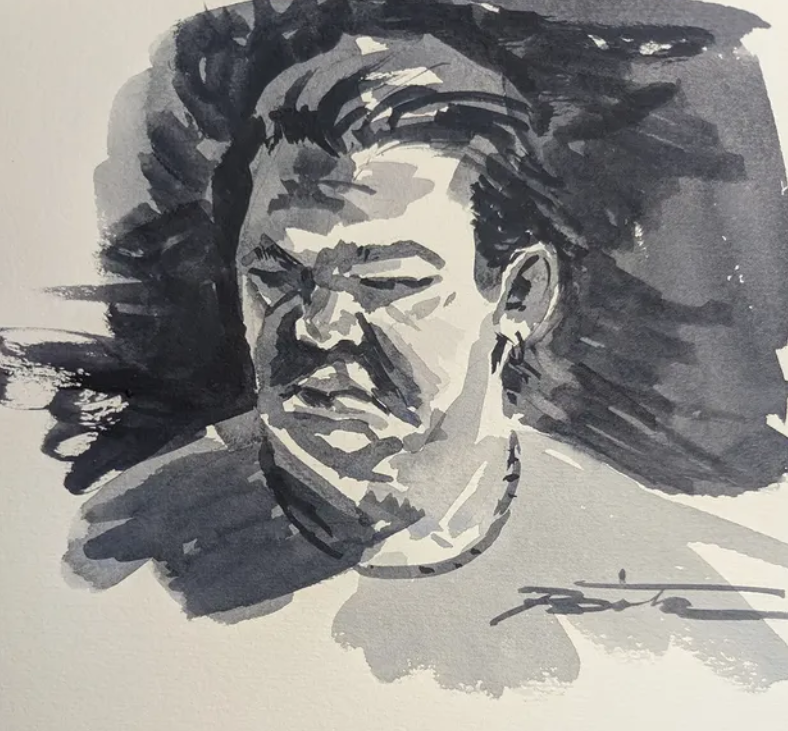
Patty’s monochrome watercolor portrait study painted on smooth hot-pressed paper
From my studioPortrait study on hot-pressed paper

The smooth surface helps me make crisp, expressive value shapes while keeping the pigment lively on the surface.

Urban sketching and outdoor studies

Portable paper still needs to welcome water.

For urban studies, sketching, and painting outdoors, I use watercolor sketchbooks that are easy to carry and strong enough for real washes.

01

Tumuarta Watercolor Journal

My 7.5 × 5 inch version contains 100% cotton, 140 lb / 300 gsm cold-pressed, acid-free paper with 24 sheets / 48 pages. It is a useful portable option for travel and outdoor work.

02

Hand Book watercolor journal

I also use Hand Book journals for urban sketching and outdoor studies. A bound journal keeps drawings and paintings together as a record of where I have been and what I noticed.

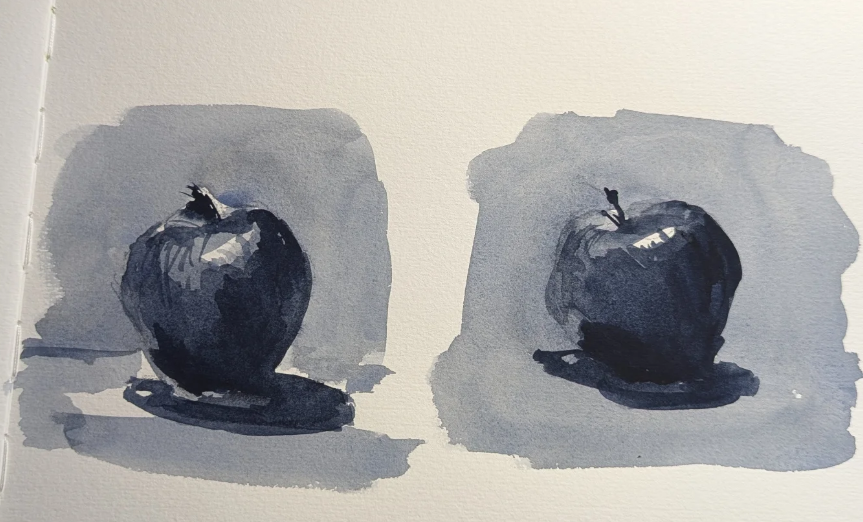
Two monochrome apple value studies painted side by side in Patty’s watercolor sketchbook
Practice in a sketchbookTwo apple value studies

A sketchbook is a wonderful place to repeat one simple subject, compare the results, and strengthen value decisions without the pressure of making a finished painting.

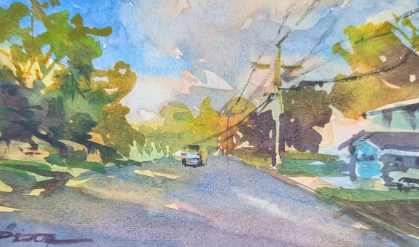
Patty’s loose color watercolor study of a sunlit neighborhood street in a sketchbook
Color in a sketchbookA loose street study

Sketchbook practice can also be colorful and atmospheric. I can simplify a complete scene, explore light and color, and preserve the freshness of the first response.

The paint I trust

I use artist-quality watercolor tube pigments.

Professional tube color gives me the pigment strength I need for generous washes, clear mixtures, and richer passages. I freely combine trusted brands in the same working palette; I choose each color for how it performs, not because every tube must carry the same label.

See my working palette and colors →
  1. 01Winsor & Newton Professional Water Colour
  2. 02Daniel Smith Extra Fine Watercolors
  3. 03M. Graham Artists’ Watercolors
  4. 04Holbein Artists’ Watercolor (HWC)

A realistic beginner budget

Buy less—but let the few things you buy work properly.

I understand that professional paper and paint can feel like a large investment. The answer is not to buy everything at once. Begin small and put the money where it changes the learning experience most.

  1. 01
    Put the largest share toward cotton paper.

    Buy one full sheet of Saunders Waterford or Arches and cut it into many small practice pieces, or begin with a small block.

  2. 02
    Choose a few artist-quality tube colors.

    A small, dependable palette will teach you more about mixing than a huge inexpensive set.

  3. 03
    Begin with one or two useful brushes.

    A good round with a point and a brush that holds enough water are more useful than a crowded collection of poor brushes.

  4. 04
    Paint small and paint often.

    Professional paper lasts much longer when divided into purposeful studies—and every study teaches you something.

The important distinction

The right tools do not replace practice.

They give the paint and water a fair chance to behave as they should. That lets the student learn the real lesson instead of struggling with a surface that cannot support it.

“You still have to learn the medium—but you should not have to fight it.”

My simple starting point

Good cotton paper.
A few professional colors.
Room to learn.

Return to the guide library