← Back to all guides

Beginner lesson · Reference, values, and color

From a busy street photograph to one clear story.

I chose the seated man, bicycle, and tree, simplified everything around them, and built the composition in three values before moving into color.

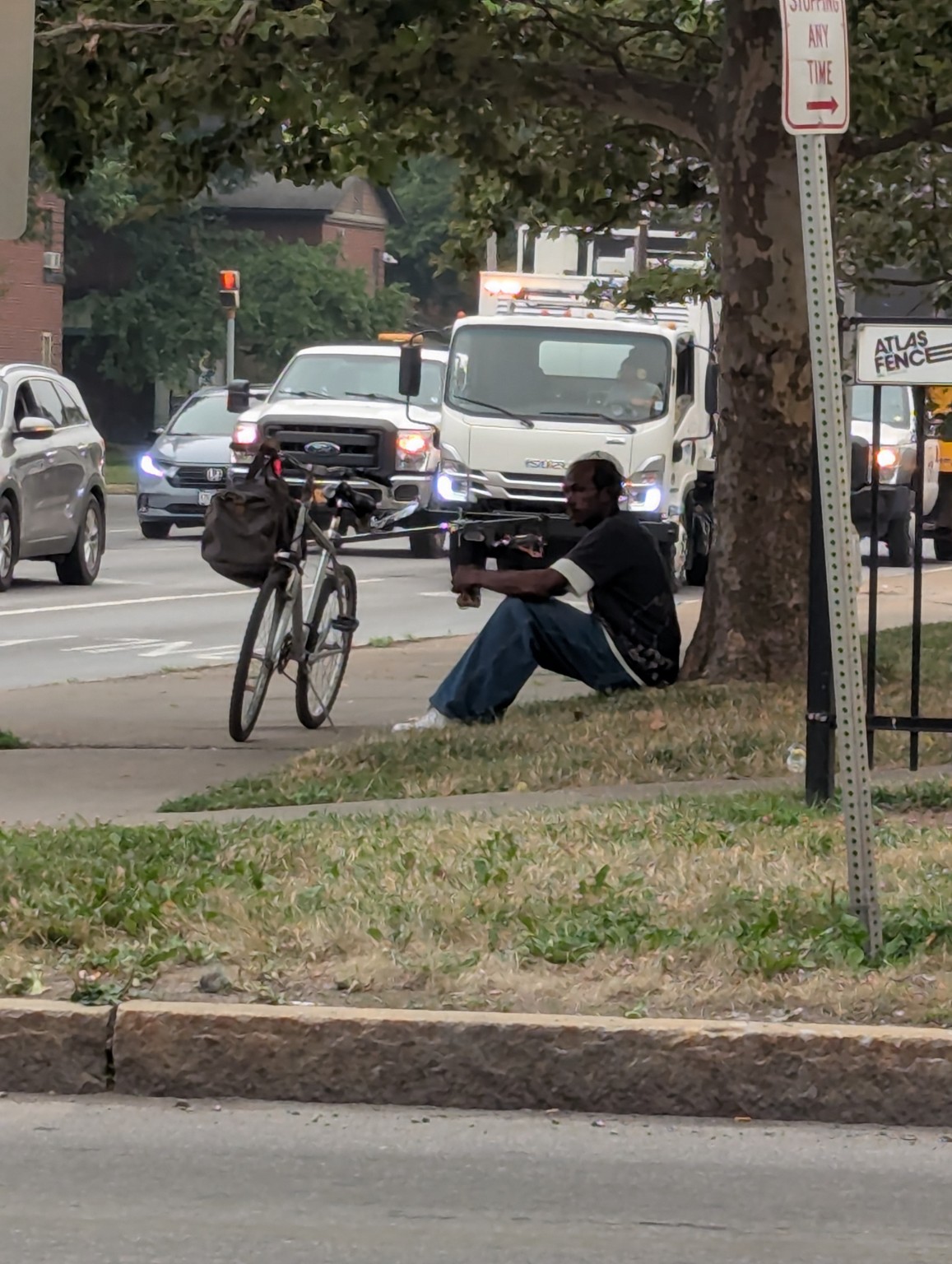
My original street photograph of a seated man beneath a large tree beside his bicycle, with traffic behind him
01The reference

Stage 01

I found the quiet story inside a busy street

The photograph contains moving traffic, signs, fencing, curb, grass, leaves, and many small details. My subject was not all that traffic. It was the quiet pause between the seated man, his bicycle, and the sheltering tree.
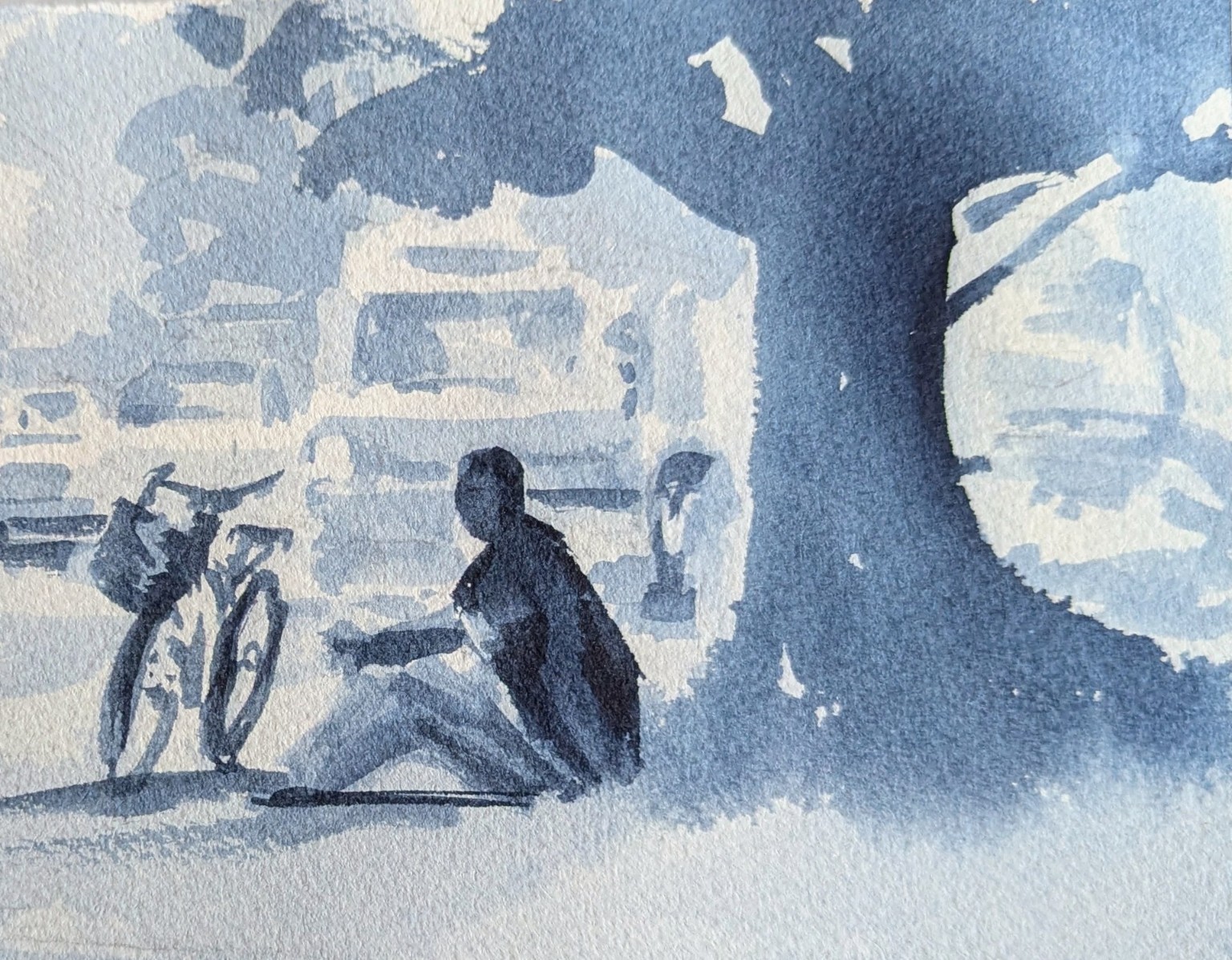
My blue-gray three-value watercolor study of the seated man, bicycle, traffic, and large tree
02The value plan

Stage 02

I made the big shapes read before adding color

I used white paper, one pale middle value, and one strong dark family. The tree canopy flows into the trunk and figure, while the bicycle and a few ground accents hold the focal area together. The cars become supporting blocks instead of separate portraits.

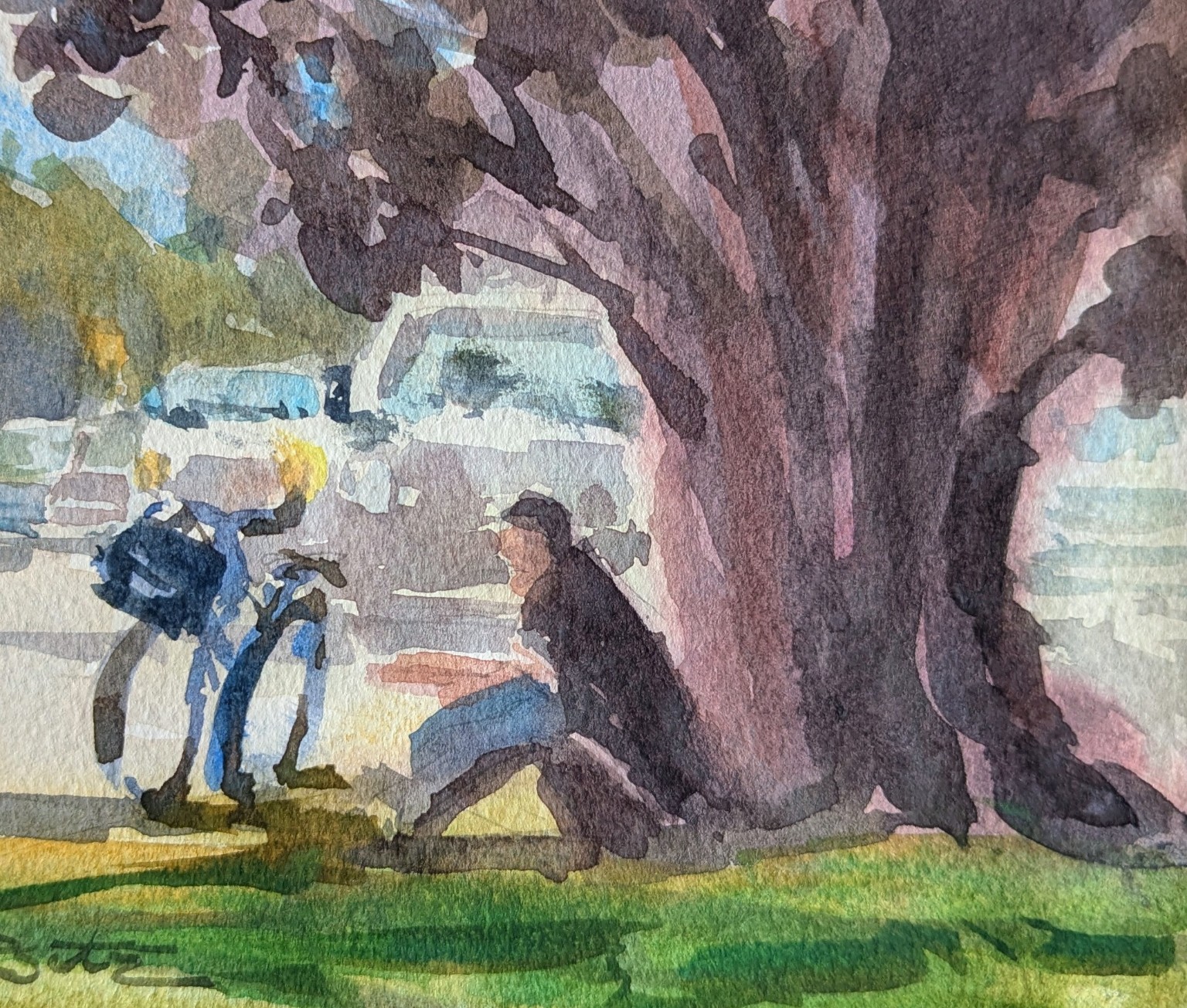
My finished watercolor of a seated man beneath a large tree beside his bicycle, with simplified traffic behind him
03The finished watercolor

Stage 03

I let the color follow the value design

The deep violet-brown tree and figure still form the main dark family. Cooler blues and grays keep the traffic quiet, and the small warm notes bring life to the scene without breaking the simple design.

Choose the story

The photograph gives me facts. I decide what matters.

My reminder

“My subject is the quiet pause beneath the tree—not every car, sign, and leaf in the photograph.”

Once I know what the painting is about, every shape has to support that idea or become simpler.

The three-value road map

Each value has one clear job.

I make this decision while the scene is still small and simple. Then I do not have to solve the composition again while handling color and water.

1

Paper white

Let the light move through.

Open sky, light vehicles, bicycle highlights, and selected ground shapes keep air around the focal point.

2

Middle value

Quiet the supporting scene.

Traffic, buildings, sidewalk, and secondary foliage become broad shapes that explain the place without demanding attention.

3

Strong dark

Connect and anchor.

The canopy, trunk, seated figure, bicycle accents, and ground marks create the strongest pathway through the painting.

What I changed

I edited the photograph before it edited my painting.

01

I cropped away most of the road and foreground curb.

02

I removed the sign, pole, fence lettering, and other distractions.

03

I simplified the traffic into broad, low-contrast shapes.

04

I kept the tree large because it frames and shelters the figure.

05

I used only enough bicycle detail to make it recognizable.

06

I saved small light shapes so the dark family could breathe.

From values into color

Color does not replace the plan.

When I move into color, I keep asking whether each mixture belongs to the light, middle, or dark family. The pigments can change, but the value structure must remain clear.

“A good value study is not another painting to finish. It is the road map that keeps the finished painting from getting lost.”

Your turn

Find one quiet story in a busy photograph.

Use one of your own street photographs. Work small and keep the study to white paper, one middle value, and one dark.

  1. Step 1
    Say what the painting is about

    Finish this sentence: “My painting is about…” If you cannot say it simply, keep looking.

  2. Step 2
    Crop out the competition

    Remove anything that pulls attention away from your chosen story.

  3. Step 3
    Paint the three-value road map

    Protect the lights, join the middle values, and connect the dark family.

  4. Step 4
    Carry the plan into color

    Keep checking the value family of every wash—and stop when the story reads from a distance.

Keep it simple

Choose the story.
Build the values.
Let color follow.

Return to the guide library