I mix a generous puddle first.
I prepare enough color before touching the paper so I can keep moving without stopping halfway to rebuild the mixture.
Beginner lesson · Transparent color, charging, and timing
Watercolor stays alive when I preserve the paper, begin with a bold juicy wash, charge color into it, and resist making pass after pass until the light disappears.
Let the paper glow
My approach
“The cleanest white in transparent watercolor is usually the paper I saved.”
White paint is not forbidden. I may use an opaque color deliberately for a special effect or final accent. I simply do not mix white routinely into every color, because it can make the painting feel chalky and dull.
The first passage
I prepare enough color before touching the paper so I can keep moving without stopping halfway to rebuild the mixture.
A broad, confident wash gives watercolor room to move. A starved brush encourages timid strokes and repeated patching.
I place prepared color into the wet wash and allow it to fuzz, travel, and mingle on the paper instead of stirring everything into one uniform mixture.
Water and pigment can make transitions more beautiful than repeated brushing. I do not scrub the life out of the passage while it settles.
Watch color move on the paper
I begin with a juicy golden wash. While the surface is still glossy, I touch richer darks and red into selected areas. The new colors soften, spread, and mingle without being brushed back and forth.
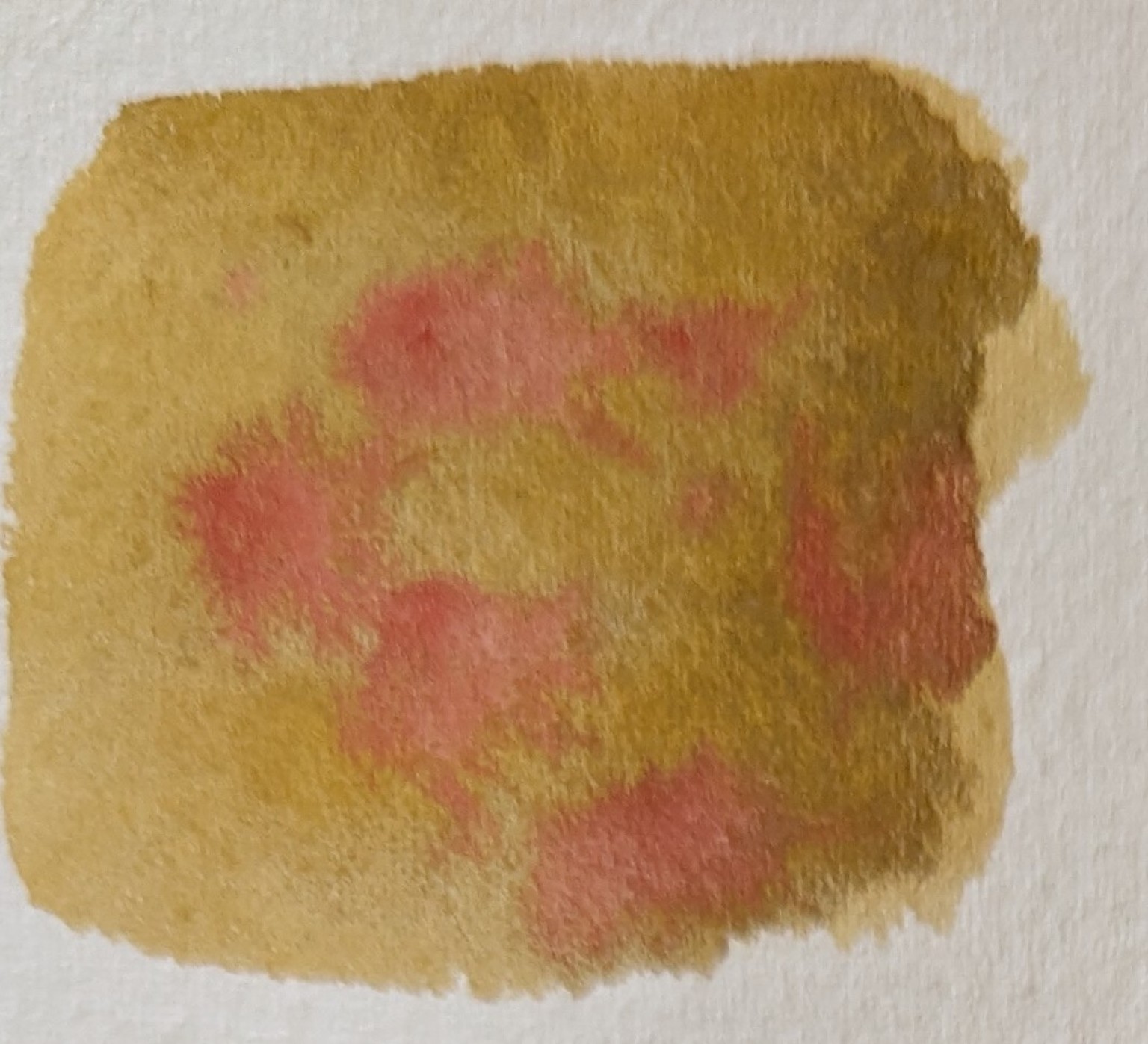
The water completed the mixing
The red and darker charges dried into soft-edged passages inside the golden wash. Some colors traveled farther than others, leaving lively variations that would have disappeared if I had brushed everything together.
“Place the color, watch it move, and let the paper keep some surprises.”
Watch the shine
Colors can travel and mingle freely. I use a generously loaded brush and allow soft, unpredictable transitions.
The paper already holds plenty of water, so any color I add must be richer and less diluted. I place it gently instead of stirring.
This is my warning to stop. A very wet brush entering now can push settling pigment away and create an unwanted bloom.
If another passage is truly needed, I wait until the paper is fully dry and add it with a clear purpose.
The concentration rule
Once water is already on the paper, I do not keep adding thin paint into thin paint. I reload with a more concentrated mixture so the new color has enough pigment to remain visible without flooding the passage.
“More pigment into the wet wash creates color. More water into a settling wash can create a bloom.”
Your turn
This small exercise teaches color concentration and timing. Use professional watercolor paint and cotton paper so you can see the behavior clearly.
Mix one pale base wash and two richer colors you would enjoy seeing mingle.
Use a larger brush and paint the shape with as few strokes as possible.
Pick up richer paint, touch it into selected places, and watch it travel. Do not brush it back and forth.
Notice how the movement slows. When the surface begins to lose its shine, put the brush down.
Study the mingled edges and color variations only after the water has finished its work.
Keep the light alive