← Back to all guides

Beginner lesson · Restraint and the stopping point

The “Leave It Alone” checklist.

Watercolor can lose its freshness one unnecessary brushstroke at a time. This is the checklist I use to decide whether the painting truly needs more—or whether it is asking me to put the brush down.

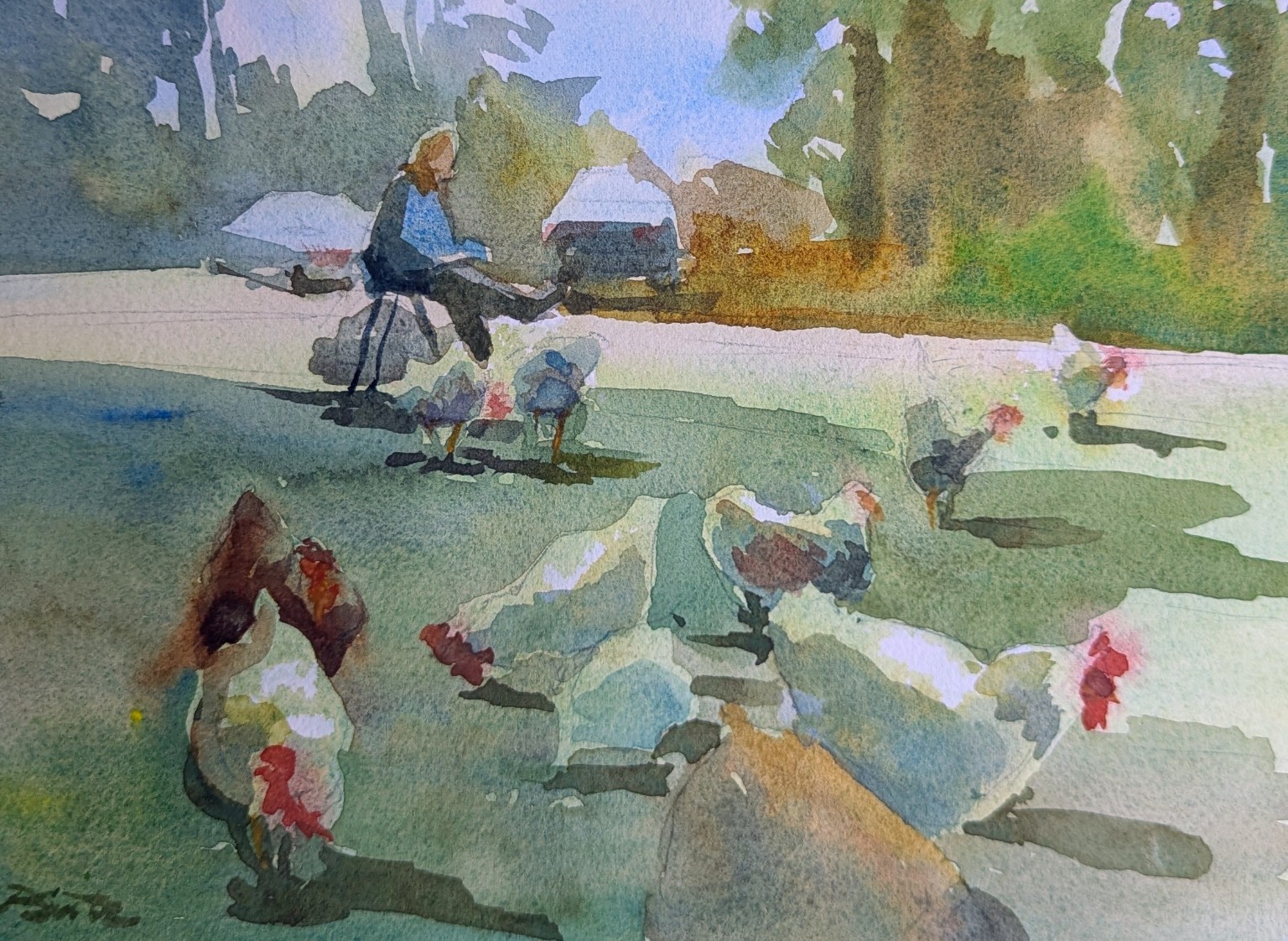
Patty's finished loose watercolor of a seated figure and chickens in Cazenovia
01Enough information

Cazenovia Chickens

The painting reads without explaining every feather.

The figure, chickens, light, and connected darks carry the story. A few selected accents are enough; additional feathers, leaves, and grass would only compete with the larger design.
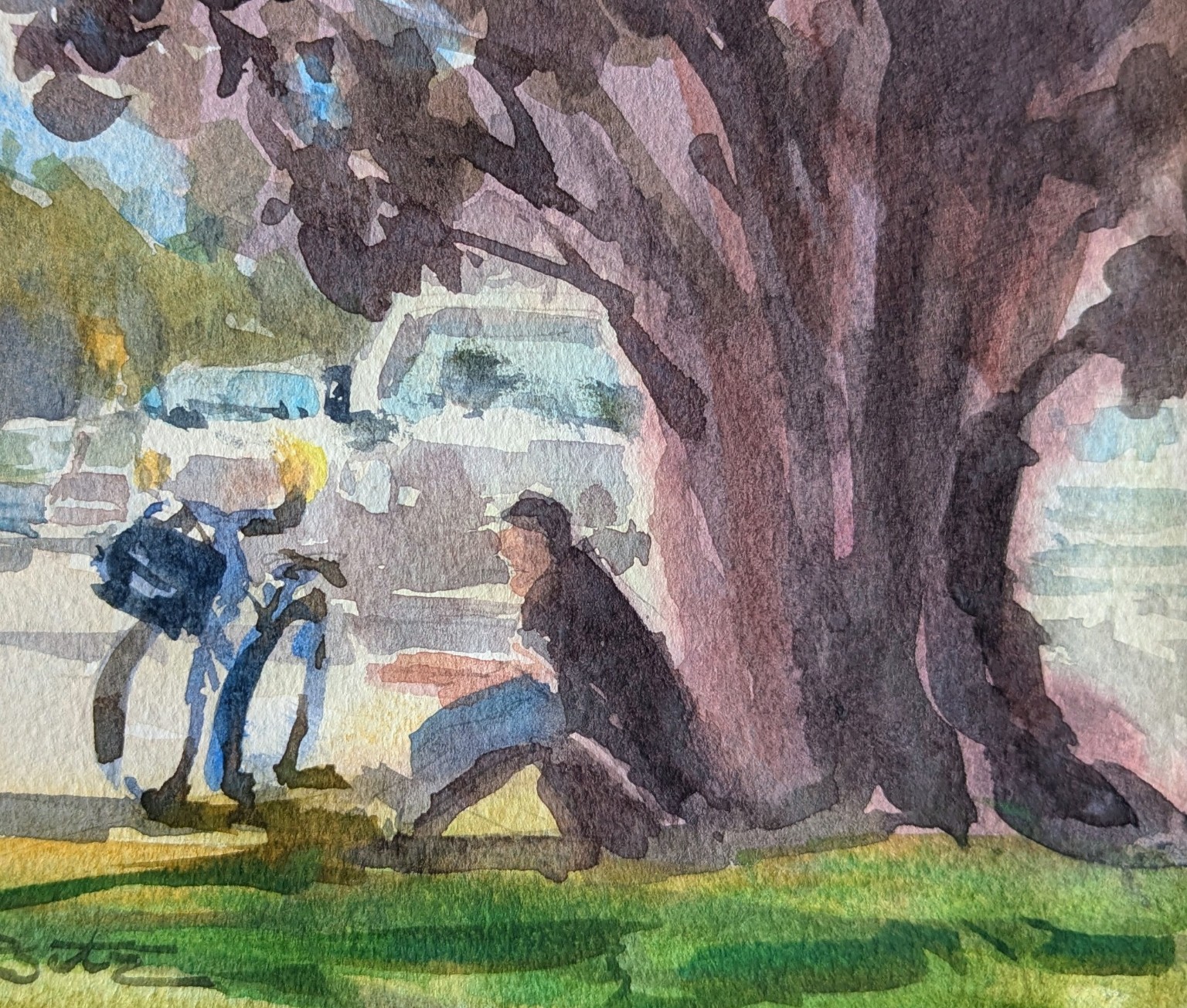
Patty's finished watercolor of a seated man beneath a large tree beside his bicycle
02Protect the quiet story

Man with a bicycle

The focal moment stays stronger than the background traffic.

The tree, seated figure, and bicycle remain the clear idea because the distant cars and buildings were not pushed to the same level of finish.

Before one more stroke

Finished does not mean every part is fully described.

My reminder

“Do not add a mark because the paper has an open spot. Add it only because the painting needs it.”

A painting is finished when its main idea reads clearly—not when every inch contains paint.

Seven questions to ask

Pause, step back, and make the next mark earn its place.

01

Let it dry before deciding.

Wet watercolor often looks darker, shinier, and more uneven than it will when dry. I give the wash time to settle before I judge it or try to fix it.

02

Step back and look from across the room.

If the subject, light, and large value pattern read from a distance, the painting is already doing its most important work. Tiny details will not rescue a weak big design—and they can easily weaken a strong one.

03

Find the focal point without searching.

My eye should know where to go. I check whether the strongest contrast, clearest edge, and most useful detail support the focal point instead of appearing everywhere.

04

Check the connected darks.

I look for scattered dark spots that could make the painting feel busy. If the main dark family already connects the subject and anchors the composition, I resist adding more little dark accents.

05

Make sure the painting can breathe.

Some white paper, quiet passages, soft edges, and unfinished areas give the stronger shapes room to speak. An open area is not automatically an empty area that needs filling.

06

Ask what the next mark will accomplish.

Before touching the paper again, I name the exact job of the mark. Will it clarify the subject, strengthen the light, connect a shape, or improve the focal point? If I cannot answer, I leave it alone.

07

When in doubt, stop and paint another.

A second small version can teach me more than twenty minutes of correcting the first one. I keep what I learned, simplify the next attempt, and allow the earlier painting to remain fresh.

My final test

Can I name the job of the next mark?

If I can name a real problem and one mark that will solve it, I may continue. If I am merely filling space, chasing a wet wash, or trying to make every object equally finished, I stop.

“If I am not sure what the next stroke is for, the painting is probably finished.”

Your turn

Practice stopping on purpose.

Use a small painting or study. The goal is not perfection; it is learning to recognize when the big idea is already there.

  1. Step 1
    Let it dry completely

    Walk away before deciding what needs correction.

  2. Step 2
    Look from a distance

    Check the subject, light, value pattern, and focal point before examining details.

  3. Step 3
    Write down one real need

    If something is missing, name it clearly before picking up the brush.

  4. Step 4
    Choose only three final marks

    Place them deliberately, put the brush down, and begin another small study instead of fussing.

Keep the watercolor alive

Let it dry.
Step back.
Leave it alone.

Return to the guide library