I chose the house as the story
The photograph contains two houses, a street sign, wires, shrubs, sidewalk, driveway, and road. I cropped closer so the warm house became the clear subject.
Beginner lesson · Composition and shadows
I did not copy everything the photograph gave me. I chose the shapes that described the house, strengthened the sunlight and shadows, and left out anything that distracted from the painting.
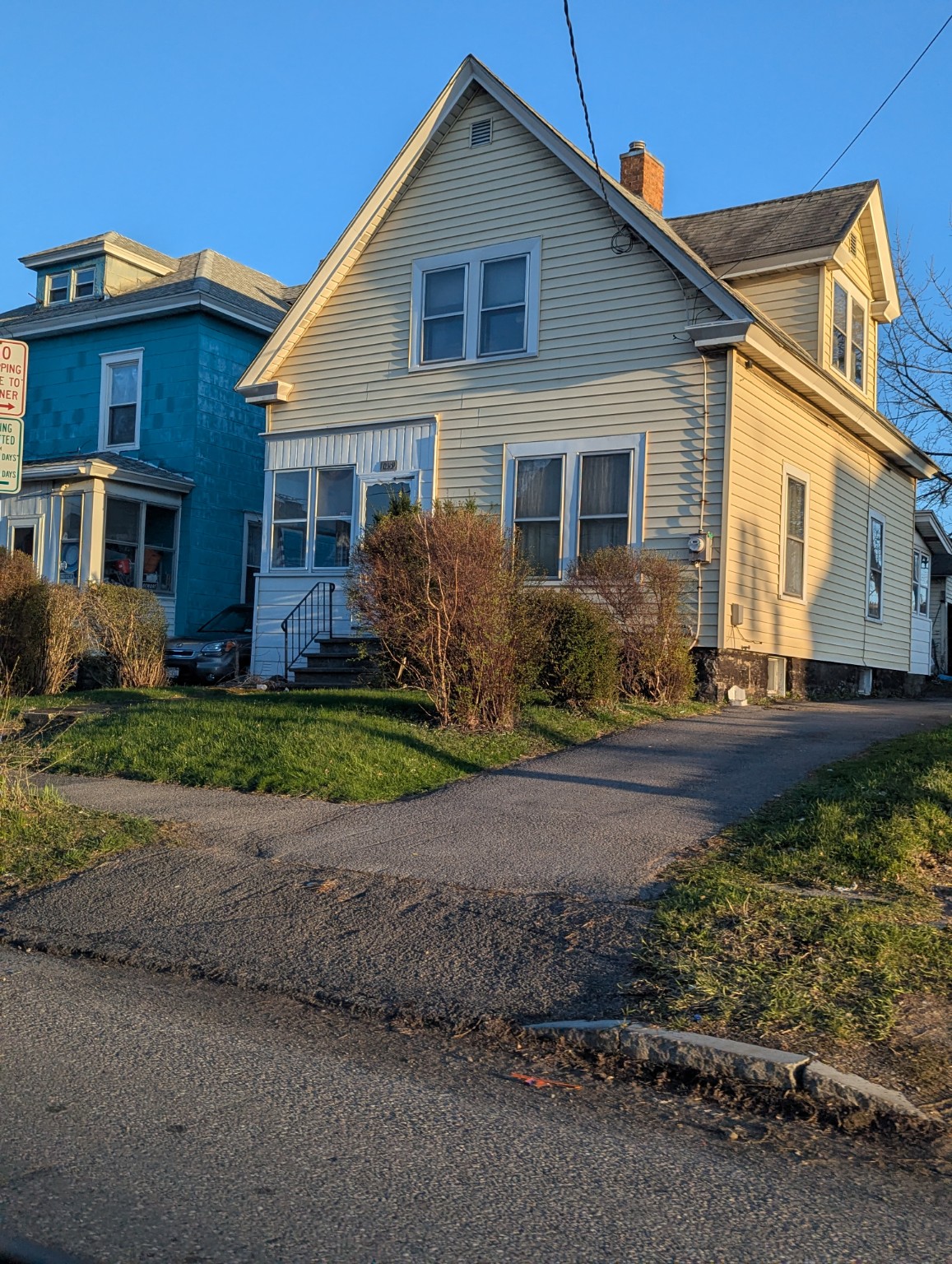
The photograph gave me information. I still had to decide what the painting needed.
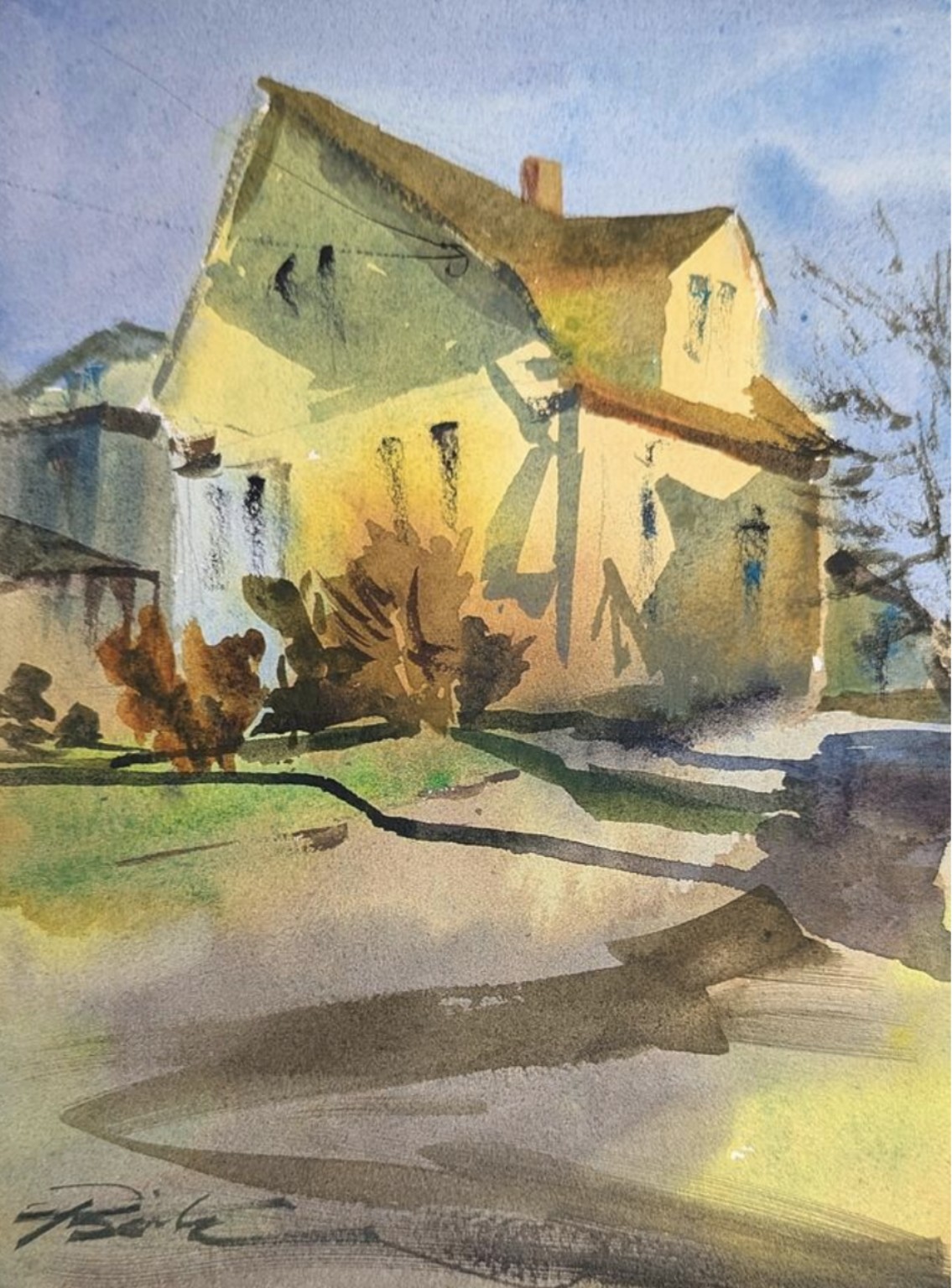
I cropped, simplified, rearranged, and strengthened the value pattern to make the house read clearly.
The artist decides
My reminder
“I don’t paint everything the photograph gives me. I choose what the painting needs.”
I can crop the scene, move or remove an object, simplify a shape, and strengthen the light. My job is to design a clear painting—not inventory every detail.
My four decisions
The photograph contains two houses, a street sign, wires, shrubs, sidewalk, driveway, and road. I cropped closer so the warm house became the clear subject.
I kept the roof angles and the important planes, but I did not describe every clapboard, window, railing, pipe, or piece of trim.
I pushed the warm wall color against cooler blue-violet shadow shapes. That warm-and-cool contrast makes the house feel sunlit.
Instead of painting many unrelated dark marks, I joined the cast shadows into larger shapes that move from the house across the driveway and foreground.
Paint the shadow shape
I establish the direction of the sunlight first. Then I look at the cast shadows as one connected design—not as separate gray patches added beneath individual objects.
All cast shadows must agree with the same source of light.
I decide where a shadow begins, where it travels, and how it changes across the ground.
A shadow can be colorful and varied while still reading as one value family.
Some edges remain crisp near the source; others soften as the shadow travels.
What I changed
01The street sign and overhead wires
02Most of the neighboring blue house
03Every window, railing, pipe, and clapboard
04Individual twigs and shrub branches
05Unnecessary road and curb detail
Your turn
Choose one of your own photographs with clear sunlight. Work small, and make a few design decisions before reaching for color.
Cover the edges of the photograph until the big idea becomes obvious.
Make a tiny value sketch and connect the shadow family before painting details.
Name them before you begin so they do not quietly return while you paint.
Step back. If the house and sunlight read from a distance, the painting has said enough.
Keep it simple