Cool into cool
Let cobalt, cerulean, or ultramarine shift gently through the wash without mixing them into one flat blue.
Beginner lesson · Gravity, the moving bead, and color
Watch the difference in real time: keep one mixture consistent for an even wash, or gradually add water for a dark-to-light wash.
Before the brush moves
My sky-wash reminder
“Keep the bead moving, keep the brush loaded, and let gravity do the work.”
I prepare the main puddle and any extra colors before starting. Once the wet edge begins traveling down the paper, I do not want to stop and remix.
Watch my brush
I begin with a rich, fully loaded mop and use its belly and side to lay down broad connected strokes. As I continue, the mixture becomes lighter and the wet passages merge into one gradual transition.
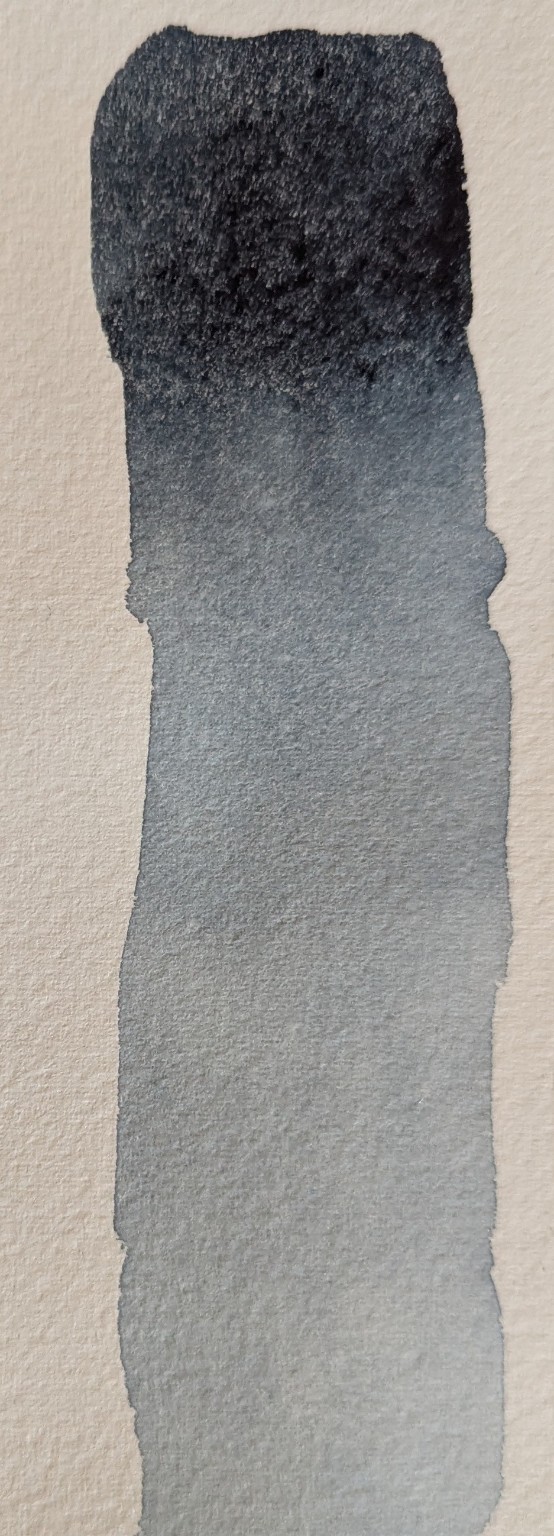
After the shine disappears
Watercolor usually dries lighter and calmer than it looks while it is glossy. Here the pigment has settled into the paper texture, but the important structure remains: a strong dark at the top that gradually becomes a pale value below.
“Let the wash finish changing before you decide whether it worked.”
Now compare the mixture
Here I return to the same prepared puddle without deliberately diluting it. I keep the brush full, overlap the wet edge, and carry the same-strength mixture steadily down the paper.
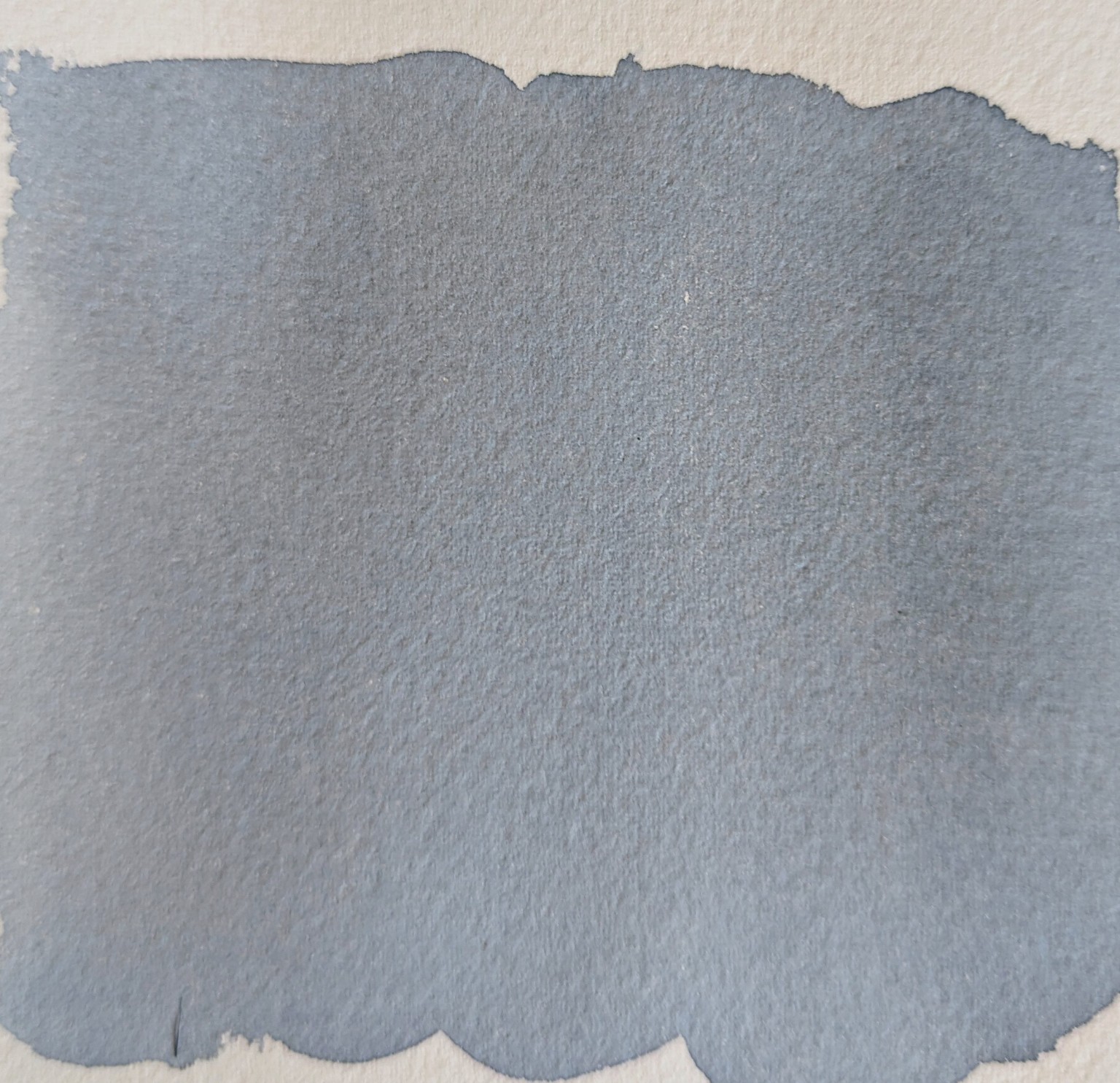
The finished even wash
The dry wash holds one overall value from side to side. The paper texture and edges still have a natural handmade character, but there are no distracting bands caused by a starving brush or a broken wet bead.
“I aim for one connected value—not a perfectly manufactured surface.”
The clean-wash method
The goal is to keep one wet edge alive. I reload from the same puddle before the brush becomes starved and place every new stroke into the bead below the previous one.
A slight angle encourages the wash to travel gradually toward the bottom of the paper.
Begin at the top with enough mixture to establish a generous, visible bead.
Return to the prepared puddle, overlap the moving wet edge, and continue downward without scrubbing.
Add clean water to the palette mixture as you descend so each stroke becomes paler toward the horizon.
At the bottom, use a clean damp brush to pick up excess wash so it does not run back into the settling passage.
Do not return to the top or repair areas that are already settling. Let the wash dry completely.
More than one blue
Let cobalt, cerulean, or ultramarine shift gently through the wash without mixing them into one flat blue.
A touch of rose or warm gold can suggest changing light when it is placed sparingly into the wet passage.
Begin with the richer sky mixture and gradually dilute the prepared puddle as the wash moves toward the horizon.
I place prepared color into the glossy wash and allow some areas to merge while others remain distinct. I do not stir every variation away.
An important distinction
For a graduated sky, I deliberately add water to my prepared palette mixture while I am still working into the juicy moving bead. I do not drop a wetter brush into an area that has begun to lose its shine.
“More water in the prepared mixture creates the gradation. More water in a settling wash can create trouble.”
If the wash goes wrong
The wet edge may have paused too long. Prepare more paint, reload sooner, and keep the bead moving steadily next time.
The brush may have been too dry or the puddle too small. A fully loaded brush and enough prepared wash reduce the urge to patch.
A wetter stroke may have entered an area that was already settling. Watch the shine and stop sooner rather than trying to brush the bloom away.
Let the sky breathe